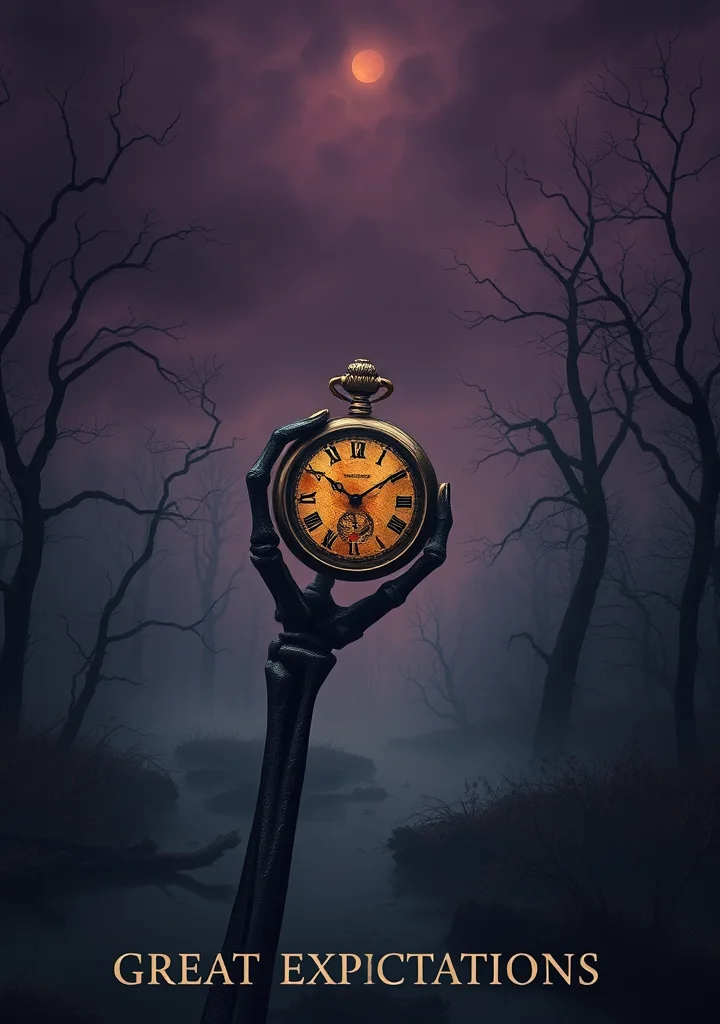

Great Expectations
  • 286
  • 0
  • 60
  • Reads 286
  • 0
  • Part 60
Completed, First published Mar 02, 2026

A fog-choked marshland births a boy haunted by shadows—not of his own making, but of a benefactor shrouded in mystery. Pip’s ascent from humble origins is not one of simple fortune, but a slow, creeping dread woven into the very fabric of his ambition. Each gilded room, each whispered promise, carries the chill of decay, mirroring a darkness within the heart of those he rises amongst. The grandeur of London is a suffocating velvet cage, filled with echoes of stolen inheritances and the brittle bones of long-forgotten sins. A spectral woman lingers in the decaying gardens, a chilling reminder that even love can be born of ruin. The air thickens with secrets, each revelation peeling back layers of deception until the very foundations of Pip’s world crumble into dust, leaving only the hollow ache of what was lost—and the chilling question of what was truly gained. It is a tale steeped in the damp earth of regret, where every expectation is a phantom limb, and the pursuit of greatness leaves only the cold, echoing emptiness of an unfulfilled yearning.

Copyright: Public Domain
This license allows anyone to use your story for any purpose, including printing, selling, or adapting it into a film freely.
Chapter List

60

Recommended for you
22 Part
The salt-laced air of the Northumbrian coast clings to every page, thick as the fog that coils around the crumbling manor of Blackwood Hall. Edgar Saltus weaves a tale of shadowed inheritances and a man unravelled by his own morbid curiosity. Mr. Incoul, a collector of forgotten ephemera, stumbles upon a legacy not of wealth, but of creeping dread—a lineage bound to the sea’s cold embrace and the whispers within Blackwood’s decaying walls. Each chapter descends further into the labyrinthine history of the Incoul family, unveiling portraits whose eyes follow you through darkened hallways and journals filled with the ravings of a mind fractured by solitude. The narrative breathes with the damp rot of ancient stone and the echoing cries of gulls circling above the storm-battered cliffs. A suffocating sense of isolation permeates the story, mirrored in the desolate landscapes and the decaying elegance of the manor itself. Incoul's investigation is not merely a search for the past, but a slow immersion into a madness that clings to the very timbers of Blackwood Hall. The further he delves, the more the line between observer and observed blurs, until the reader, like Incoul, finds themselves adrift in a sea of spectral whispers and the chilling weight of a history best left undisturbed. The story doesn't offer escape, but a descent – a haunting unraveling of sanity within a landscape steeped in the scent of brine and decay.
28 Part
A creeping dread settles over the manor of Blackwood Grange with each echoing tap. The rhythm isn’t of nails against wood, but something colder, something resonating from *within* the stone itself. Old Man Hemlock, caretaker for generations, claims the taps are the rhythm of the house remembering its dead – the Blackwood line extinguished by scandal and rot. But young Alistair, summoned to settle the estate, finds the taps follow *him*. They begin subtly, a phantom knock on the bedroom door at midnight, then escalate to the insistent pulse against the hearthstone, the icy brush against his collar as he descends the shadowed stairs. The Grange is a labyrinth of dust-choked corridors and portraits with eyes that seem to judge, the scent of decay clinging to velvet hangings and worm-eaten beams. Rain lashes against the leaded windows, mirroring the frantic beat of Alistair’s heart as he uncovers fragments of the Blackwood’s past – whispered accusations of witchcraft, a bride vanishing into the peat bogs, a legacy of madness woven into the very foundation. Each tap feels less like a haunting, and more like a summons—a beckoning from something ancient and hungry, buried beneath the Grange’s suffocating silence. It isn’t a ghost that haunts Blackwood Grange, but the house itself, and Alistair is being drawn into its stone embrace, to become another echo in its dreadful, rhythmic pulse. The three taps are not a warning, but an invitation.
113 Part
Dust motes dance in the perpetual twilight of Gandersheim Abbey, where the echoes of chanted prayers cling to stone walls thick with centuries of silence. Within its shadowed scriptorium, a young novice, shadowed by visions and whispers, begins to transcribe the plays—not for performance, but for penance. Each line penned, each character sketched, bleeds into the fabric of her waking nightmares, mirroring the fractured history of the convent itself. The dramas are not tales of saints and salvation, but fractured accounts of forgotten queens, possessed by ambition and regret, their stories woven with the scent of damp earth and the taste of iron. The plays are not merely written, they *are* summoned—drawn from the decaying memories of the women who preceded her, each performance a spectral re-enactment within the novice’s mind. A creeping dread descends as she discovers the plays aren’t merely records of past performances, but keys to unlocking something far older, something tethered to the very foundations of the abbey. The lines blur between script and reality, between the living and the dead, until the novice finds herself not writing the plays, but *becoming* them, consumed by the echoing cries of queens dethroned and gods betrayed. The abbey itself breathes with a cold hunger, a silent audience to the unfolding horror as the novice’s hand trembles with the weight of forgotten sins and the chilling truth that the plays are not a lament for the past, but a prophecy of what is to come.