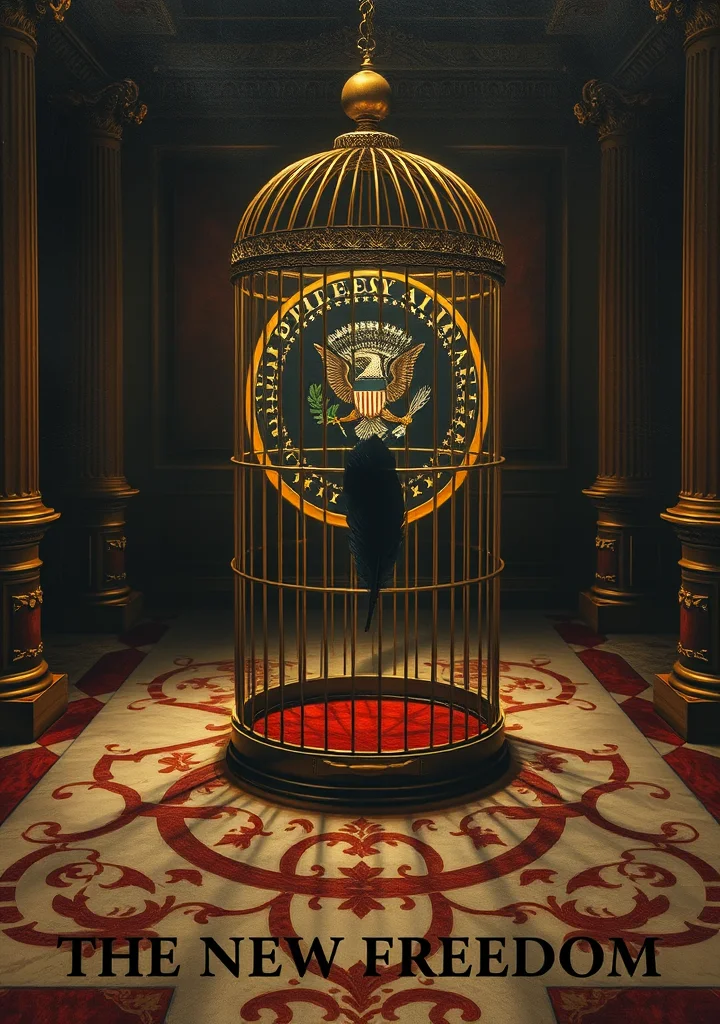

The New Freedom
  • 92
  • 0
  • 16
  • Reads 92
  • 0
  • Part 16
Completed, First published Mar 02, 2026

A creeping dread permeates the shadowed halls of post-war America. The “New Freedom” promised isn’t liberation, but a gilded cage constructed of ambition and regret. Whispers follow the President’s pronouncements—a chill wind carrying the scent of decay from abandoned ideals. The narrative unfolds as a slow erosion of the soul, a descent into the suffocating elegance of a nation built on compromise. Every polished surface reflects a fractured image; every declaration of progress echoes with the hollow clang of chains. A suffocating humidity clings to the Southern plantations, mirroring the moral rot within the halls of Congress. The story is one of phantom debts, of the spectral weight of unacknowledged suffering. Dust motes dance in the lamplight, each a tiny ghost of broken promises. The characters, draped in the suffocating formality of the era, are haunted by the ghosts of their ancestors, their fortunes built on foundations of quiet violence. The landscape itself seems to mourn – cypress swamps swallowing the light, and iron rails rusting in the encroaching darkness. It is a freedom bought at the cost of a creeping, unseen terror – a freedom that tastes of ash and regret.
Copyright: Public Domain
This license allows anyone to use your story for any purpose, including printing, selling, or adapting it into a film freely.
Recommended for you
28 Part
Salt-laced winds whisper through rigging stiff with brine, carrying tales not of glory, but of rot and ruin clinging to the splintered decks of forgotten vessels. This is not a chronicle of swashbuckling adventure, but a descent into the shadowed heart of the pirate world – a world where ambition is measured in the weight of gold and the slow drip of blood on stained canvas. Johnson’s history doesn’t celebrate, it *exposes*. Each captain is a phantom haunting the Caribbean, driven by avarice and shadowed by the ghosts of their victims. The pages reek of gunpowder and decay, filled with accounts of mutiny blossoming in the humid dark of ship holds, of marooned men gnawing on desperation, and the cold calculus of survival amongst men who’ve traded their souls for a share of plunder. It’s a history built on the fractured confessions of those who lived beyond the law, their voices echoing from the gallows and the fever-soaked jungles. But more than just recounting deeds, Johnson unveils the architecture of a pirate’s mind – the brutal pragmatism, the simmering paranoia, the terrifying ease with which they embraced violence as a currency. The sea itself becomes a character, a vast, indifferent judge presiding over a kingdom built on treachery and sustained by the desperate cries of men swallowed by the black maw of the ocean. It’s a history less of pirates *doing*, and more of them *becoming* – monstrous reflections in the storm-wracked mirror of a lawless age. A darkness clings to every name, every port, every captured vessel – a darkness that lingers long after the last cannon shot fades into the salt spray.
10 Part
The air hangs thick with dust and the scent of decay, clinging to the crumbling adobe walls of the hacienda like a shroud. Beyond Thirty isn’t merely a place, but a threshold—a descent into a sun-bleached nightmare where the desert breathes secrets into the bones of the dead. Old Man Cregar, a spectral figure draped in shadows and regret, guards this desolate stretch of land with a fanatic’s zeal. He’s a shepherd of ghosts, they say, and his eyes hold the vacant stare of a man who’s stared too long into the abyss. The narrative unravels with the slow, agonizing crawl of a scorpion across sun-baked earth. Each chapter is a layer peeled back from a rot-ridden core, revealing a history of violence and avarice buried beneath the shifting sands. The land itself seems to conspire against sanity, warping the sun-scorched minds of men into instruments of cruelty. Whispers follow you in the canyons, shadows dance with the skeletons of forgotten dreams, and the very stones seem to weep with the memory of unspeakable acts. There’s a pervasive sense of being watched, of something ancient and predatory circling just beyond the periphery of vision. The sun bleeds across the horizon like a fresh wound, staining the landscape with a feverish crimson hue. It’s a place where madness blooms like a desert flower, beautiful and deadly, and where the boundaries between the living and the damned blur into a single, suffocating breath. The story isn’t about *reaching* Beyond Thirty; it’s about what Beyond Thirty does to you. It unravels, it consumes, it leaves only bleached bones and a hollow echo in the vast, unforgiving emptiness.


36 Part
A creeping chill settles over the brownstone facades of New York, mirroring the slow, insidious decay of innocence within Catherine Sloper. The air hangs heavy with unspoken anxieties, thick with the scent of decaying roses and the hushed judgments of a society obsessed with pedigree. Every shadowed corner of Washington Square seems to breathe with the weight of expectation, a gilded cage designed to stifle the blossoming spirit of a woman deemed plain, practical, and possessed of a fortune too easily coveted. A suffocating inheritance becomes a cage of observation, where every glance, every calculated kindness, is a transaction in the currency of social climbing. The narrative unfolds as a slow, deliberate unraveling—a dance between perception and reality, shadowed by the predatory gaze of a man whose motives are as labyrinthine as the wrought iron gates guarding the square. A haunting sense of isolation permeates the story, clinging to the damp cobblestones and echoing in the cavernous parlors. It is a world rendered in shades of grey—the grey of dust motes dancing in sunbeams, the grey of faded portraits mirroring past failures, the grey of a heart slowly calcifying beneath layers of constraint. The very architecture seems to conspire to trap Catherine within a suffocating cycle of appraisal, and the final, desolate revelation will leave a residue of unspoken grief clinging to the reader long after the final page is turned. It is a portrait of a life lived not within warmth and light, but within the glacial shadow of expectation.