
The Transformation of Philip Jettan
  • 166
  • 0
  • 20
  • Reads 166
  • 0
  • Part 20
Completed, First published Mar 02, 2026

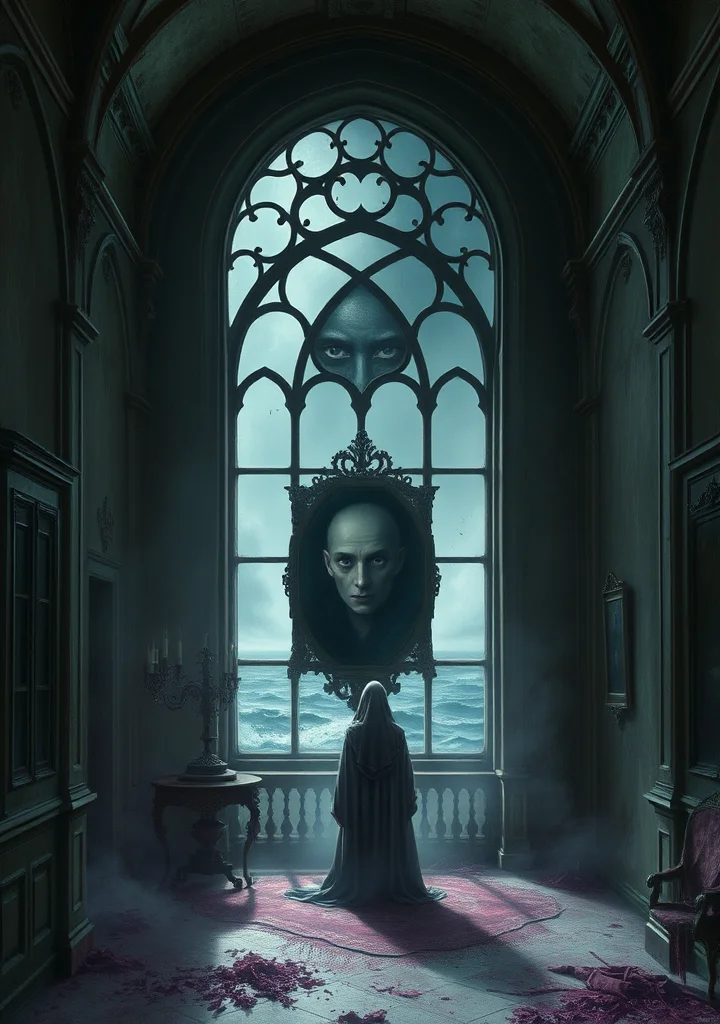
A creeping dread clings to the crumbling manor of Blackwood Hall, where Philip Jettan, a man haunted by shadowed debts and a past he cannot outrun, seeks refuge. But Blackwood is not merely stone and timber; it breathes with a suffocating history, a legacy of whispered madness and illicit bargains struck in the dead of night. As Philip attempts to settle his inherited estate, a slow, insidious metamorphosis takes hold. Not of body, but of spirit. The portraits in the long gallery seem to watch him with judging eyes, the very air grows thick with a chilling expectancy, and the locals speak of a curse that clings to the Jettan line. He finds himself drawn into a labyrinth of ancestral secrets, shadowed by the spectral echo of a family tragedy. The transformation isn’t one of violent possession, but of insidious unraveling, a gentle decay of reason as Philip succumbs to the suffocating weight of Blackwood’s history. Each inherited object, each darkened corridor, becomes a mirror reflecting not his face, but the creeping madness that has claimed generations before him. The scent of decay is not merely in the rotting wood, but in the slow erosion of Philip's own identity, replaced by something ancient, something hungry, and utterly, irrevocably lost to the shadows of Blackwood Hall.
Copyright: Public Domain
This license allows anyone to use your story for any purpose, including printing, selling, or adapting it into a film freely.
Recommended for you
21 Part
Dust motes dance in the perpetual twilight of the Egyptian desert, mirroring the fractured memories of Dr. Elias Thorne. He arrives at the crumbling estate of Lord Ashworth, summoned to authenticate a relic – the Eye of Osiris, a gem said to gaze into the soul’s decay. But the manor breathes with a history of madness, its stone corridors echoing with whispers of a lineage cursed by obsession. Each room, a suffocating tableau of shadowed portraits and decaying grandeur, seems to watch Thorne as he unravels the Ashworths’ descent into a morbid fascination with the artifact. The desert wind carries not only sand, but the scent of ancient grief, seeping from the very foundations of the house. Thorne’s investigation is less a search for authenticity, and more a slow immersion into a suffocating dread. He finds himself haunted by reflections, by the unsettling stillness of servants who bear the hollowed eyes of those possessed. The Eye isn’t merely observed, it *compels* – feeding on the fragile sanity of its keepers, revealing glimpses of a forgotten god’s hunger. As Thorne delves deeper, the line between artifact and curse blurs. The estate itself becomes a labyrinth of shifting allegiances, of shadowed figures who seem to emerge from the very walls. He discovers a rot within the Ashworth bloodline, a ritualistic madness enacted under the gaze of the gem. The desert’s sun bleeds into the stained glass of the manor’s chapel, painting the stone floors with crimson, and Thorne realizes he isn’t merely cataloging a relic’s history, but charting his own descent into a darkness older than the sands themselves. The Eye doesn’t just see *into* the soul; it consumes it, leaving only echoes in the endless, echoing halls.
23 Part
Dust motes dance in the long shadows of the schoolhouse, clinging to the chill stone walls where generations of boys have scraped their futures onto the rough-hewn desks. This is not a tale of grand horrors, but of a creeping dread found in the hollow spaces between loyalty and betrayal, the weight of tradition pressing down like a tombstone. Young Tom Brown enters this world, raw and untamed, and is slowly, inexorably, broken down and reshaped by the brutal currents of school life. It’s a darkness born not of malice, but of indifference—the casual cruelty of boys desperate to prove their dominance, the stifling conformity demanded by an unyielding system. The echoing hallways become a labyrinth of whispers and shoves, a constant negotiation of power where a single misstep can mean weeks of torment. Fog hangs heavy in the yards, obscuring the faces of those who haunt Tom's waking hours, their actions unseen yet felt in the tightening of chests and the tremor of hands. The narrative unfolds like a slow, agonizing bleed, the innocence of youth curdling into a grim acceptance of the inevitable—a descent into a shared, silent complicity born of necessity and fear. It is a world where the true monsters are not found in the shadows, but in the very hearts of the boys who forge their manhood within these unforgiving walls. The scent of damp wool and old wood clings to the pages, a testament to the enduring chill of those days.