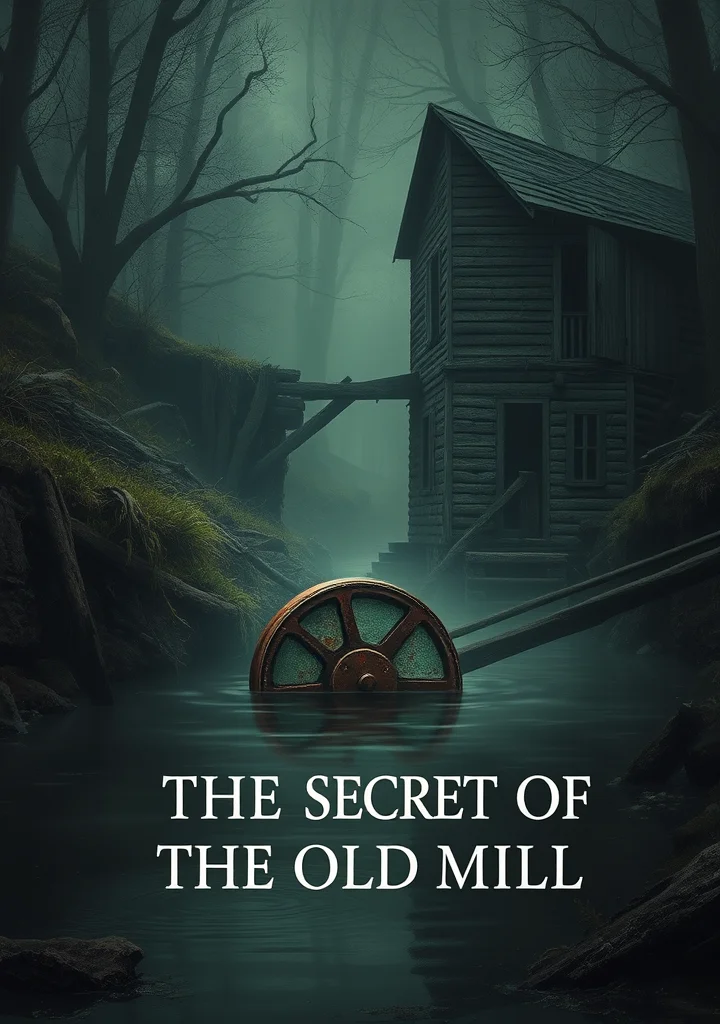

The Secret of the Old Mill
  • 209
  • 0
  • 26
  • Reads 209
  • 0
  • Part 26
Completed, First published Mar 02, 2026

Dust motes dance in the perpetual twilight of Blackwood Hollow, clinging to the rotting timbers of the mill like mournful spirits. The air hangs thick with the scent of damp wood, decaying grain, and a sorrow that seeps from the very stones. This is a place where the river whispers forgotten names, where shadows stretch long and hungry across the water, and where the silence isn’t empty, but brimming with the echoes of a tragedy best left undisturbed. A young man, driven by whispers of inheritance and shadowed by a family curse, finds himself drawn into the mill's labyrinthine depths. Each creaking floorboard, each rusted cog, each swirling eddy in the millrace seems to breathe a warning. The deeper he goes, the more the mill’s secrets unravel – not of gold or greed, but of a desperate love, a betrayal etched into the wood, and a darkness that has festered for generations. The mill isn’t just a building; it’s a tomb, and the river…the river remembers everything. A creeping dread settles in his bones as he realizes the mill isn't just hiding a secret, but guarding it with a chilling, spectral vigilance. The truth will cost him more than he dares imagine, and the hollow will claim another soul swallowed by the mill's insidious embrace.
Copyright: Public Domain
This license allows anyone to use your story for any purpose, including printing, selling, or adapting it into a film freely.
Recommended for you
20 Part
A creeping dread clings to the salt-laced air of Porthaven, a village choked by perpetual mist and shadowed by the crumbling manor of Blackwood Hall. Old Man Hemlock, postmaster and keeper of forgotten grievances, delivers letters not to their intended hands, but to the hollows of regret and festering secrets. Each missive, delivered with a tremor and a whispered apology, unravels a life already frayed by loneliness and the weight of unacknowledged sins. The narrative follows Elara Thorne, a woman haunted by a correspondence she never sent, a confession penned in feverish ink and delivered to a phantom recipient. As she seeks the source of these spectral deliveries, she descends into Blackwood’s labyrinthine halls, where portraits weep with soot and the scent of brine mixes with the dust of forgotten rituals. The house itself breathes with a sorrowful intelligence, its corridors echoing with the murmur of broken promises. Every room is a mausoleum of fractured memory, each object a shard of a life shattered by the wrong letter—a word misplaced, a truth concealed, a love betrayed. The very stones seem to weep with the weight of the past, and Elara finds herself caught in a tightening spiral of delusion and decay, unsure if the horrors she uncovers are real or born of her own unraveling mind. The fog outside mirrors the confusion within, obscuring the boundaries between the living and the dead, and the truth buried beneath layers of whispered accusations and unspoken fears. A chilling silence pervades, punctuated only by the relentless drip of rain and the unsettling certainty that someone, somewhere, is watching her unravel.
29 Part
A creeping dread clings to the shadowed corners of a boy’s ascension. Within the stifling grandeur of a European court, young Otto, heir to a crumbling dynasty, finds his life a gilded cage. But this is no simple tale of royal constraint. A sickness—physical, political, and something far older—infests the palace, manifesting in whispered anxieties and the chillingly precise machinations of a physician obsessed with prolonging life beyond its natural end. The narrative unfolds as a fever dream, blurring the lines between boyhood innocence and the monstrous ambitions of a kingdom built on decay. Every corridor echoes with the weight of tradition, every smile masks a festering resentment. Otto’s world is one of inherited sorrow, where the very air tastes of resignation and the rituals of power are conducted with the hushed reverence afforded to a slow, inevitable rot. The atmosphere is suffocating, a velvet darkness punctuated by the flickering candlelight of conspiracy. We move with Otto through labyrinthine chambers, haunted by the ghosts of his ancestors and the phantom promises of a future he cannot grasp. It is a story not of grand battles or heroic deeds, but of insidious influence, of a boy’s spirit eroding within the ornate prison of his birthright, until the prince becomes less a person and more a symptom of the kingdom’s own morbid vitality. The scent of lilies and decay permeates every page, promising not salvation, but a descent into a beautifully wrought, suffocating despair.


15 Part
Dust motes dance in the perpetual twilight of a London nursery, where a carpet woven with ancient symbols stirs to life. Not with thread and dye, but with the embers of forgotten djinn, bound to obey a boy’s whim. A phoenix, magnificent and terrible, unfolds from its crimson threads, a creature of scorching desire and ash-grey regret. The house itself seems to breathe with the bird’s fiery heart, shadows lengthening into monstrous shapes as the carpet’s magic pulls at the seams of reality. The scent of cinnamon and burning feathers clings to the air, thick with whispers of a past where wishes are bought with stolen sunsets. Each flight of the phoenix, each murmured command, unravels another layer of the nursery’s gilded cage, revealing a world both exhilarating and deeply, unnervingly lonely. The very floorboards groan beneath the weight of impossible journeys, echoing with the laughter of children lost in the labyrinth of their own making. A creeping dread settles amongst the velvet curtains and porcelain dolls, a premonition that the power granted is not freely given. The carpet doesn't merely transport; it *remembers*. It holds the echoes of every longing, every secret, every shadowed bargain struck within its weave. And as the phoenix circles higher, the nursery – and the lives bound within it – begin to unravel, consumed by a hunger that stretches beyond the reach of childish dreams. The air itself tastes of smoke and forgotten promises.
56 Part
A creeping dread clings to the shadowed corners of Jurgen’s world, a land steeped in the melancholic decay of ancient magic. The tale unfolds as a descent into a half-remembered nightmare, where the boundaries between dream and reality blur with each echoing chime of distant bells. Jurgen himself, a man of humble origins, is swept into a labyrinth of perverse desires and forgotten gods. His journey is not one of heroism, but of insidious corruption, a slow unraveling of innocence amidst courts of spectral royalty and monstrous appetites. The air hangs thick with the scent of moldering tapestries and the rustle of unseen things. Forests breathe with a sentience both alluring and terrifying, and the laughter of faeries carries the chilling promise of stolen souls. Every encounter feels less like progress and more like a tightening coil around the heart. A pervasive sense of loneliness permeates the narrative; Jurgen is always just beyond reach, a phantom glimpsed through fogged windows. The story breathes with a morbid elegance, a decadent rot blossoming beneath a veneer of polite society. It’s a world where kindness is a curse, and every act of love is shadowed by a looming, unspeakable price. The landscapes themselves seem to weep, mirroring the slow, agonizing erosion of Jurgen’s spirit as he becomes irrevocably entangled in the web of his own making. It’s a descent into a darkness that promises not oblivion, but a twisted, eternal mockery of life.