
-
Read 370
-
0
-
Part 13
Completed, First published Mar 02, 2026
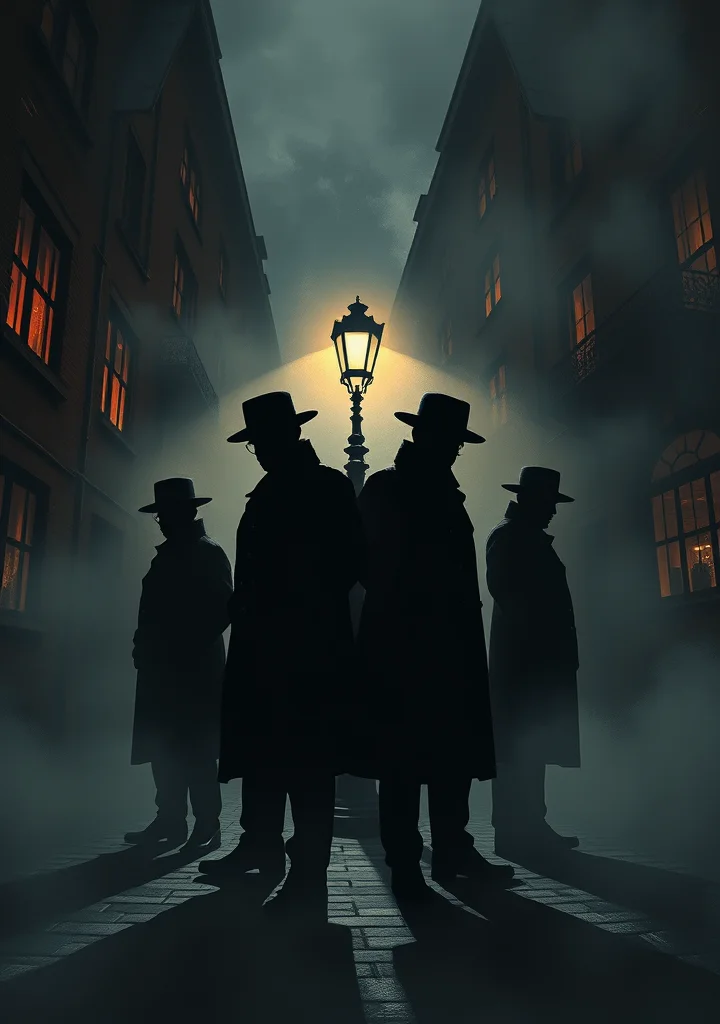
A suffocating London fog clings to the shadowed alleys and opulent drawing rooms where justice, or its brutal imitation, is dispensed by a quartet of silent, implacable figures. Wallace weaves a labyrinth of moral ambiguity, where the sins of the wealthy and powerful are met not with courts and prisons, but with meticulously orchestrated punishments delivered by men who operate beyond the reach of law. The air tastes of coal smoke and desperation as the narrative unravels, revealing a chilling calculus of retribution. Each act of their vigilante justice is a slow burn, ignited by whispers of corruption and fueled by the despair of those abandoned by the system. The novel isn't merely about *what* they do, but *how* it haunts the very foundations of a society built on hypocrisy. A creeping dread permeates the story as the reader is forced to question whether the ends truly justify the methods, or if these ‘Just Men’ have simply traded one darkness for another. The scent of decay, both societal and personal, clings to every page, promising a descent into a world where morality is a luxury no one can afford.
Copyright: Public Domain
This license allows anyone to use your story for any purpose, including printing, selling, or adapting it into a film freely.
This license allows anyone to use your story for any purpose, including printing, selling, or adapting it into a film freely.
Chapter List
-
« The Law of the Four Just Men »📖 Continue Reading
-
« Chapter_3 »
-
« The Law of the Four Just Men »
-
« The Man Who Lived at Clapham »
-
« The Man with the Canine Teeth »
-
« The Man Who Hated Earthworms »
-
« The Man Who Died Twice »
-
« The Man Who Hated Amelia Jones »
-
« The Man Who Was Happy »
-
« The Man Who Loved Music »
-
« The Man Who Was Plucked »
-
« The Man Who Would Not Speak »
-
« The Man Who Was Acquitted »
13
-
« The Law of the Four Just Men »
-
« Chapter_3 »
-
« The Law of the Four Just Men »
-
« The Man Who Lived at Clapham »
-
« The Man with the Canine Teeth »
-
« The Man Who Hated Earthworms »
-
« The Man Who Died Twice »
-
« The Man Who Hated Amelia Jones »
-
« The Man Who Was Happy »
-
« The Man Who Loved Music »
-
« The Man Who Was Plucked »
-
« The Man Who Would Not Speak »
-
« The Man Who Was Acquitted »
More like this