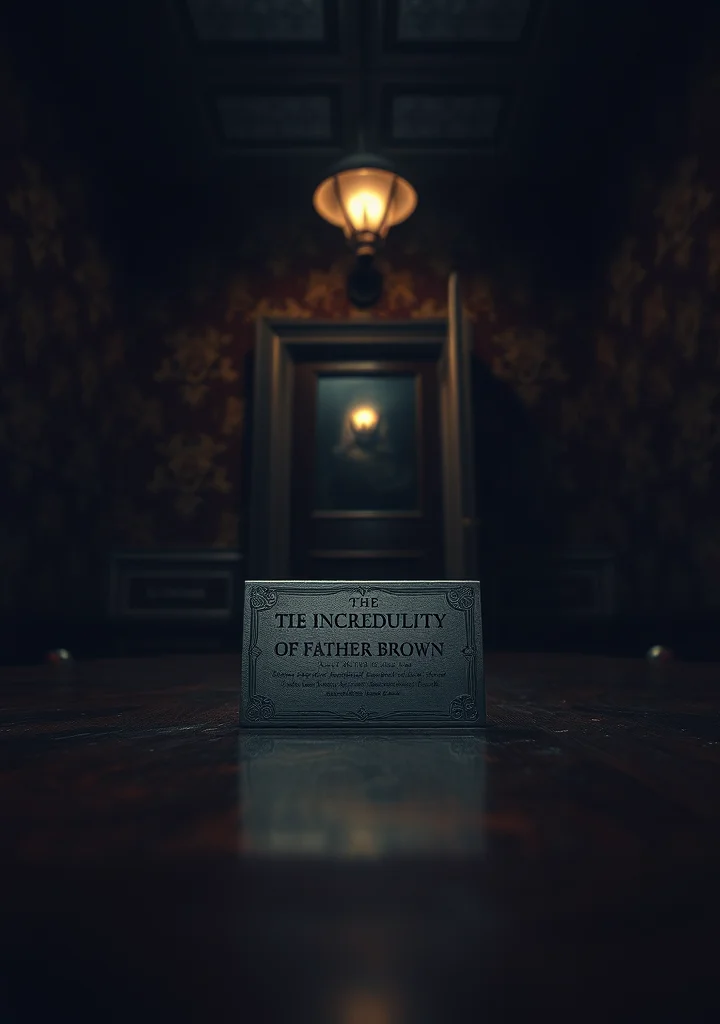

The Incredulity of Father Brown
  • 112
  • 0
  • 12
  • Reads 112
  • 0
  • Part 12
Completed, First published Mar 02, 2026

A perpetual twilight clings to these tales, not of shadow and dread in the manner of the macabre, but a creeping unease born of surfaces. Each polished drawing-room, each meticulously tended garden, hides a fracture in the soul. Father Brown’s investigations are not hunts for monstrous villains, but delicate dissections of the human heart where pride and petty grievance twist into acts of desperation. The scent of beeswax and old money hangs heavy as guilt is revealed not through grand confessions, but through the glint of a misplaced ornament, the tremor in a voice recounting a commonplace lie. The world is one of suffocating respectability, where the true horrors are concealed within the polite smiles of the gentry, and the most damning evidence is found in the subtle, suffocating weight of social expectation. A fog of moral ambiguity settles over every case, leaving one to question if justice is truly served or merely a convenient arrangement of comfortable deceits. The narrative breathes with the claustrophobia of Victorian interiors—the velvet curtains, the looming portraits—each detail a silent witness to the fractured logic of those who believe themselves beyond reproach. It’s a darkness woven not from monsters, but from the very fabric of polite society, slowly unraveling beneath the weight of its own hypocrisy.
Copyright: Public Domain
This license allows anyone to use your story for any purpose, including printing, selling, or adapting it into a film freely.
Recommended for you
26 Part
A creeping mist clings to the painted lawns of Ozma’s kingdom, a land perpetually twilight-veiled. Not the vibrant, sun-drenched Oz of Dorothy’s first journey, but a realm of shadowed groves and whispering stone. Here, enchantment curdles into a brittle stillness, where the laughter of fairy folk feels less like joy and more like the echo of forgotten promises. The air hangs thick with the scent of decaying blossoms and damp earth, a fragrance that clings to the velvet robes of the Princess herself. This is an Oz where enchantment is fracturing, where the very magic that birthed the land seems to weep into the soil. The narrative unfolds like a fever dream, a labyrinth of emerald corridors and echoing caverns. Lost within this labyrinth, a young boy is ensnared by a sorceress whose beauty masks a heart of frost. She doesn’t crave dominion, but *absence* – the slow unraveling of Oz’s shimmering threads. The story bleeds into a world of living statues, haunted forests teeming with grotesque bird-like creatures, and the unnerving calm of an underground kingdom built on bone. A creeping dread permeates every chapter, as the characters stumble through a landscape where every turn reveals a new, unsettling reflection of their own vulnerabilities. The familiar comforts of Oz are replaced by an exquisite melancholy, a sense that something beautiful is slowly, irrevocably fading into dust. It is a journey not towards a happy ending, but into the heart of a gilded ruin.
6 Part
A creeping dread clings to the shadowed streets of Paris, mirroring the decay within Béatrix’s very soul. Balzac doesn’t offer romance, but a slow, exquisite unraveling. The narrative coils around a young woman whose beauty is a fragile inheritance, purchased with a desperate bargain struck against a creeping, inherited malady. Her existence is a gilded cage, gilded with the sickly sheen of ambition and financed by a husband whose affections are as cold as the marble of his ancestral estate. The air within is thick with the scent of decaying fortunes, whispered debts, and the suffocating weight of societal expectation. Each gesture, each calculated smile, feels less like living and more like a performance staged for a ravenous audience. A pervasive sense of rot permeates every scene, not merely in the crumbling grandeur of the homes but in the hearts of those who inhabit them. The novel doesn't reveal monsters in the darkness, but exposes the monstrous compromises made in the light. The narrative is less concerned with what happens *to* Béatrix than with the subtle erosion of her spirit, a fading luminescence devoured by the insatiable hunger of the Parisian elite. It’s a story of exquisite confinement, where the only escape is a descent into a darkness more profound than the illness that threatens to consume her. The shadows lengthen, and with each passing chapter, one feels the tightening grip of a fate far more sinister than mere mortality.

19 Part
The salt-laced air hangs thick with dread, clinging to the rotting timbers of the *Morian*, a vessel haunted by more than just the spectral chill of the North Atlantic. A creeping contagion, born of shadowed ports and whispered bargains with sea-witchery, festers within its hold, twisting flesh and fracturing minds. The narrative unfolds not as a tale of heroic defiance, but as a slow, agonizing unraveling. Each deck becomes a labyrinth of fevered delirium and decaying grandeur, mirroring the fractured psyche of Captain Keveren, bound by duty to a cargo more terrifying than any kraken. Norton doesn’t offer swashbuckling adventure, but a claustrophobic descent into madness. The ship itself is a character—a leviathan of grief and rot, breathing out despair with every creak of its ancient frame. The crew aren’t warriors, but desperate souls clinging to the tattered remnants of their humanity as the plague consumes them, their struggles rendered in muted tones of gray and sickly green. Expect a pervasive sense of isolation, not from open ocean, but from the very bodies around you, each touch bringing closer the inevitable bloom of the sickness. The story is less about escaping the ship, and more about the horrifying realization that the plague is not merely a disease, but a haunting—a parasitic echo of something ancient and malevolent awakened by the sea. The darkness doesn’t arrive with a dramatic storm, but seeps through the planks, clinging to the skin, and ultimately, claiming the soul.